
Counter-UAS Defense
Multi-Layered Airspace Protection
The rapid proliferation of unmanned aerial systems has created an entirely new category of airspace threat. From commercial drones modified for surveillance to purpose-built unmanned platforms capable of carrying payloads, the challenge facing security operators demands a multi-layered approach to detection, tracking, identification, and response.
SSME delivers configurable counter-UAS architectures that combine radio frequency analysis, radar-based surveillance, electro-optical and infrared tracking, and threat classification into a unified operational picture. Each deployment is engineered to match the specific threat profile, terrain conditions, and regulatory requirements of the protected site.
Our counter-UAS solutions are designed for layered defense, meaning no single sensor or method operates in isolation. Multiple detection technologies work simultaneously, cross-referencing data to reduce false positives, accelerate identification, and provide operators with verified, actionable intelligence before any response protocol is initiated.
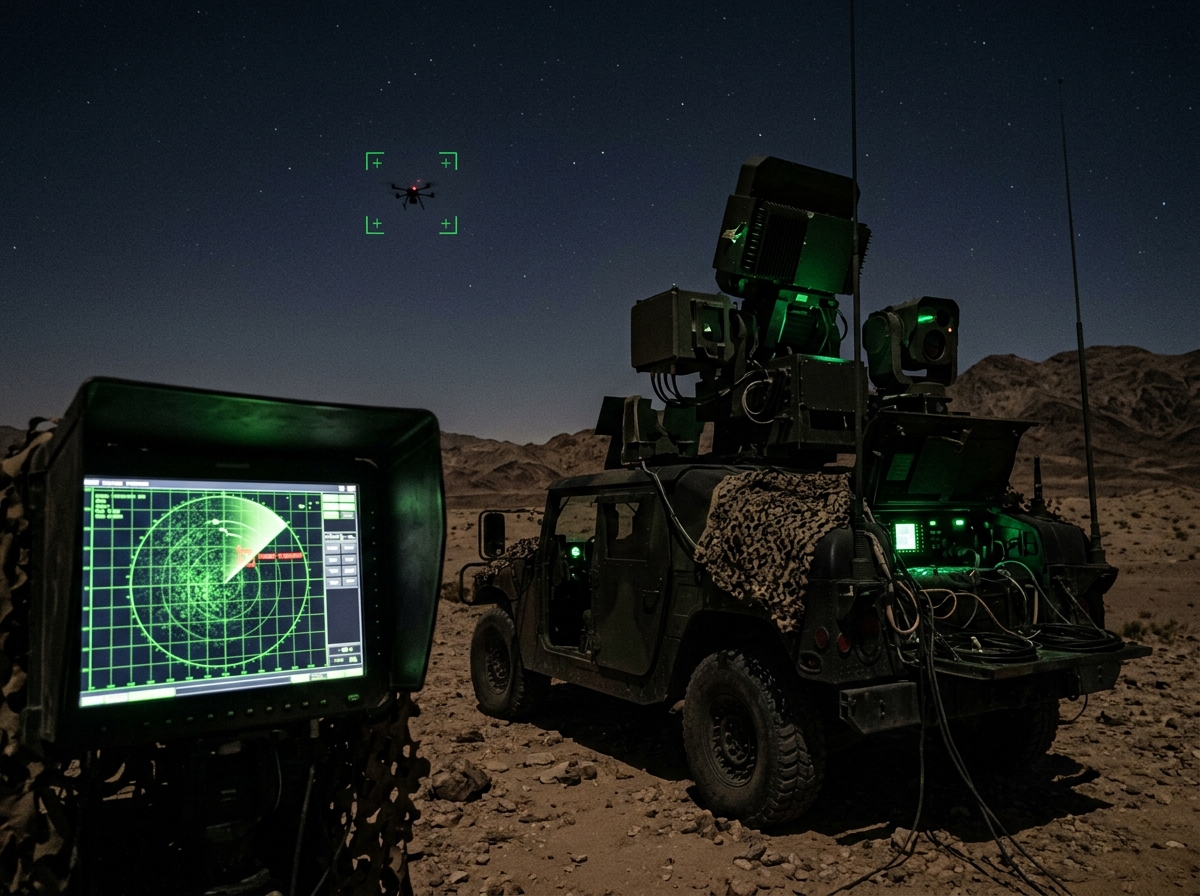
Counter-UAS Technology Stack
Six integrated capabilities form the foundation of every SSME counter-UAS deployment, configurable to operational requirements and site-specific threat profiles.
RF Detection & Analysis
Passive radio frequency sensors scan the electromagnetic spectrum to detect drone communication links, control signals, and telemetry transmissions. RF analysis identifies the frequency bands, modulation types, and signal characteristics associated with known and unknown unmanned platforms.
Radar-Based Surveillance
Specialized micro-Doppler and phased-array radar systems detect low-altitude, slow-moving, and small cross-section aerial targets that conventional air-defense radar cannot reliably track. Configurable scan patterns provide persistent 360-degree coverage or focused sector monitoring.
EO/IR Visual Tracking
Electro-optical and infrared camera systems provide visual confirmation and continuous tracking of detected targets. Day and night capability ensures persistent surveillance, while automated slew-to-cue functionality directs cameras to radar or RF-detected targets for immediate visual verification.
Threat Classification & Verification
Advanced classification algorithms analyze sensor data to determine drone type, manufacturer profile, payload indicators, and behavioral patterns. Multi-source correlation reduces false alarms and provides operators with confidence-rated threat assessments before response decisions are made.
Command & Control Integration
All counter-UAS sensor feeds consolidate into a unified command-and-control interface providing real-time situation awareness. The C2 platform integrates with existing security operations centers and supports multi-site coordination for organizations managing distributed assets.
Configurable Response Protocols
Response options are tailored to operational context, regulatory environment, and rules of engagement. All mitigation measures are subject to regulatory approval and configured in coordination with relevant authorities to ensure compliance with applicable national and international regulations.
Counter-UAS Operational Workflow
A structured six-phase operational cycle from initial detection through post-incident reporting, ensuring every threat is handled with precision and accountability.
Detect
RF sensors, radar arrays, and acoustic monitors continuously scan the airspace for unauthorized drone activity and anomalous aerial signatures.
Track
Multi-sensor fusion locks onto detected targets, continuously monitoring trajectory, speed, altitude, heading, and flight behavior patterns.
Identify
Classification algorithms cross-reference sensor data against signature databases to determine drone type, manufacturer, and potential threat level.
Verify
EO/IR visual confirmation and operator validation ensure accurate threat assessment before any response protocol is authorized.
Respond
Configurable countermeasures are activated based on threat classification, operational context, rules of engagement, and regulatory authorization.
Report
Automated incident documentation captures forensic data, sensor logs, response actions, and outcomes for compliance review and operational analysis.
Where Counter-UAS Protection Matters Most
Counter-UAS solutions configured for the unique airspace protection requirements of high-value sectors across KSA, GCC, and Africa.
Airports & Aviation
Protecting controlled airspace, runways, terminals, and approach corridors from unauthorized drone incursions that can disrupt operations and endanger manned aircraft.
Military Bases
Persistent airspace surveillance over military installations, ammunition depots, and operational areas requiring continuous counter-drone vigilance against reconnaissance and payload delivery threats.
Oil & Gas
Safeguarding refineries, processing plants, pipeline corridors, and offshore platforms from drone-based surveillance, smuggling, and potential disruption of energy infrastructure.
Borders & Perimeters
Extending counter-drone coverage across land and maritime borders where drones are used for smuggling, unauthorized crossing facilitation, and intelligence gathering.
Government & Diplomatic Sites
Airspace protection for government buildings, embassies, royal palaces, and state institutions where aerial surveillance or intrusion poses national security concerns.
VIP & Public Events
Temporary and rapid-deploy counter-UAS protection for summits, sporting events, national celebrations, and high-profile gatherings requiring assured airspace security.
Understanding Counter-UAS
What is Counter-UAS?
Counter-UAS (Counter-Unmanned Aircraft Systems) is the collective term for technologies, techniques, and operational procedures designed to detect, track, identify, classify, and mitigate unauthorized or hostile drones and unmanned aerial vehicles. A comprehensive counter-UAS system combines multiple sensor modalities — including radio frequency detection, radar surveillance, electro-optical and infrared cameras, and acoustic sensors — into an integrated architecture that provides layered airspace protection. SSME delivers counter-UAS solutions configured for airports, military bases, oil and gas facilities, borders, government sites, and public events across the Kingdom of Saudi Arabia, the Gulf Cooperation Council region, and Africa. All response capabilities are subject to applicable regulations and deployed in coordination with relevant authorities.
Counter-UAS Defense FAQ
What is Counter-UAS?
Counter-UAS, also known as counter-drone or C-UAS, refers to the full spectrum of systems and methods designed to detect, track, identify, and neutralize unauthorized unmanned aerial systems. These solutions protect restricted airspace by combining multiple sensor technologies — such as RF analysis, radar, and electro-optical cameras — to provide layered detection and verified response capabilities. Counter-UAS is essential for airports, military installations, critical infrastructure, and any site where unauthorized drone activity represents a security, safety, or operational risk.
How does drone detection work?
Drone detection employs multiple complementary sensor technologies operating simultaneously. Radio frequency sensors passively monitor the electromagnetic spectrum for drone control signals and telemetry links. Specialized radar systems detect the small radar cross-section and low-altitude flight profiles characteristic of unmanned platforms. Electro-optical and infrared cameras provide visual confirmation and continuous tracking. Some systems also incorporate acoustic sensors that detect the distinctive sound signatures of drone propulsion. By fusing data from multiple sensor types, the system achieves higher detection accuracy, reduced false positives, and faster classification than any single sensor could provide alone.
What sectors need counter-drone protection?
Counter-drone protection is critical for any sector where unauthorized aerial activity could compromise safety, security, or operations. Key sectors include airports and civil aviation (where drones pose collision risks to manned aircraft), military bases and defense installations, oil and gas facilities (refineries, pipelines, offshore platforms), government buildings and diplomatic sites, correctional facilities, border zones, ports and maritime infrastructure, stadiums and event venues, and VIP protection operations. The specific counter-UAS configuration is tailored to each sector's unique threat profile, regulatory environment, and operational requirements.
Can counter-UAS systems detect drone swarms?
Modern counter-UAS architectures are designed to address multi-drone scenarios, including coordinated swarm activity. Advanced radar and RF detection systems can simultaneously track multiple airborne targets across a protected zone. Sensor fusion algorithms correlate individual detections into a unified operational picture, identifying whether targets are operating independently or as a coordinated group. The command-and-control interface provides operators with real-time visibility into swarm size, formation behavior, and trajectory predictions. Response protocols for multi-drone events are configured based on the operational context and are subject to applicable authorization and rules of engagement.
How does SSME integrate C-UAS with existing security?
SSME counter-UAS solutions are engineered for integration with existing security operations centers and infrastructure. The C2 platform accepts feeds from perimeter surveillance systems, access control networks, and other installed sensors, while providing counter-UAS data back to the master security management system. Standard communication protocols and open architecture design enable interoperability with third-party platforms. For sites with legacy security infrastructure, SSME conducts a comprehensive site assessment to define integration requirements, communication pathways, and operator workflow adjustments needed to incorporate counter-UAS into the overall security posture without disrupting existing operations.
Request a Counter-UAS Assessment
Whether you are protecting an airport, securing a military installation, or evaluating counter-drone requirements for critical infrastructure, our team will conduct a thorough assessment of your airspace protection needs and recommend a tailored solution architecture.