Why Command and Control Integration Matters for Modern Defense
The nature of contemporary military operations has changed fundamentally over the past two decades. Where defense forces once planned and executed missions within single operational domains, today's threat landscape demands coordinated action across land, sea, air, space, and cyberspace simultaneously. This shift has exposed a critical challenge: legacy command and control systems, designed for single-domain operations, cannot support the speed and complexity of multi-domain warfare.
Command and control, commonly abbreviated as C2, refers to the exercise of authority and direction by a commander over assigned forces. In a multi-domain context, C2 must synthesize intelligence from dozens of sensor types, correlate tracks across different operational pictures, and deliver decision-quality information to commanders within seconds rather than minutes. The stakes are high. Delays in information processing, gaps in situational awareness, or failures in communication between domains can result in missed engagement windows, fratricide risks, and degraded mission effectiveness.
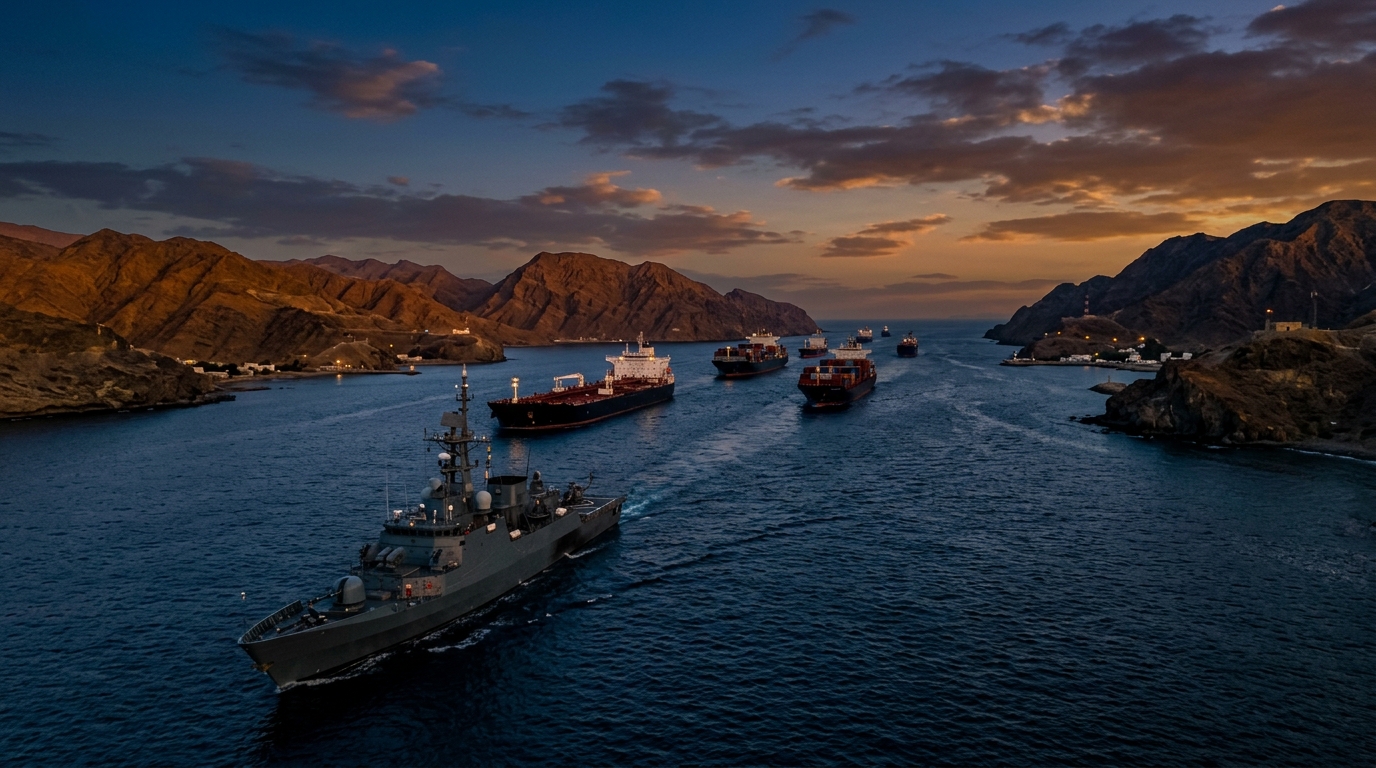
For defense forces operating in the Gulf region, where air, maritime, and land threats can emerge simultaneously from asymmetric adversaries, the imperative for integrated C2 is particularly acute. The Kingdom of Saudi Arabia and its GCC partners face a security environment that includes ballistic missile threats, unmanned aerial system incursions, maritime disruption in vital shipping corridors, and cyber operations targeting critical infrastructure. Addressing these concurrent threats requires C2 architectures that break down traditional domain silos and enable holistic operational decision-making.
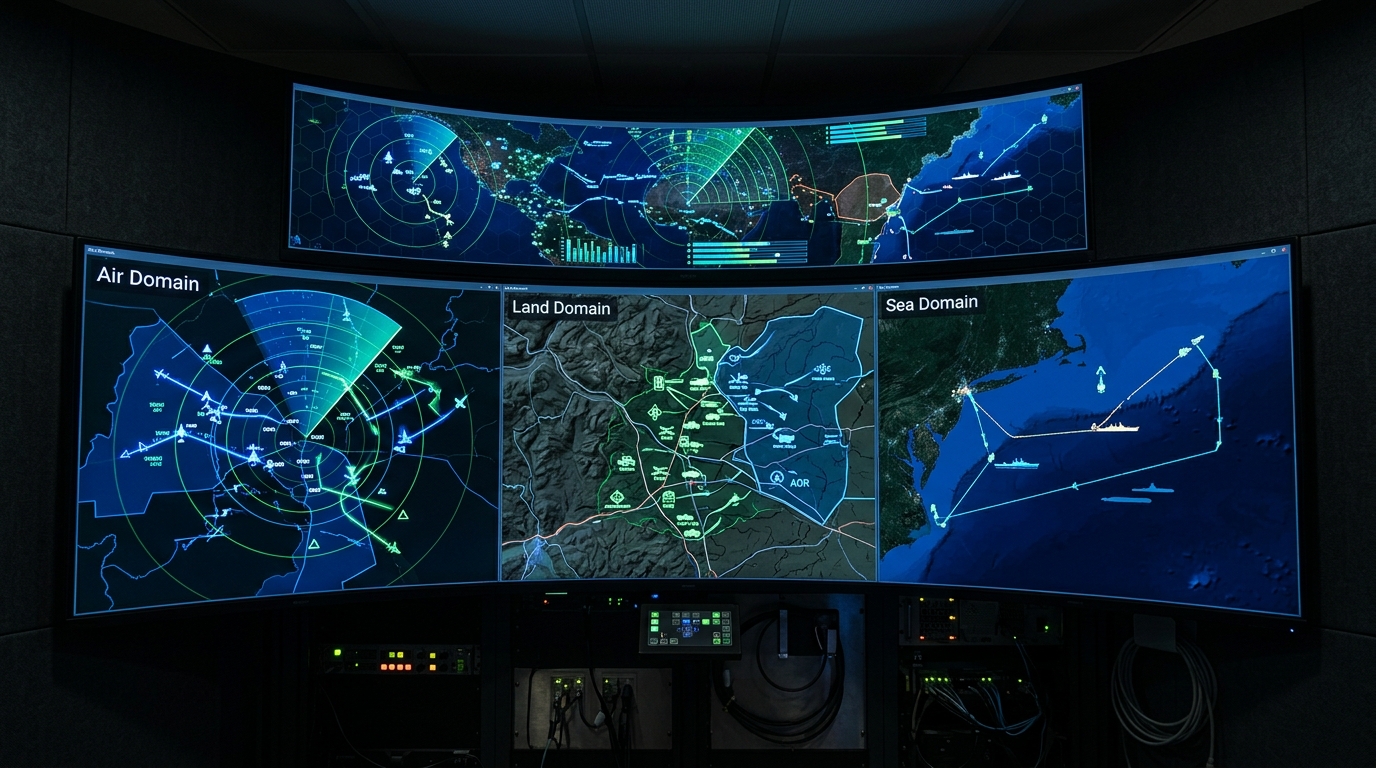
The Multi-Domain Challenge
Each operational domain generates its own category of sensor data, uses distinct communication protocols, and operates under different tactical timelines. Air defense radars track targets at hundreds of kilometers per second. Ground-based surveillance systems monitor personnel and vehicle movements across border zones. Maritime sensors track vessel movements through automatic identification systems and coastal radar networks. Cyber operations unfold in milliseconds across digital infrastructure.
The fundamental challenge of multi-domain integration is not merely technical but architectural. Traditional C2 systems were built as vertical stacks serving individual service branches. An air defense operations center processed radar and identification friend-or-foe data. A naval operations center managed surface and subsurface tracks. A ground force headquarters handled tactical ground movements. Each operated with its own database, its own communication network, and its own situational display.
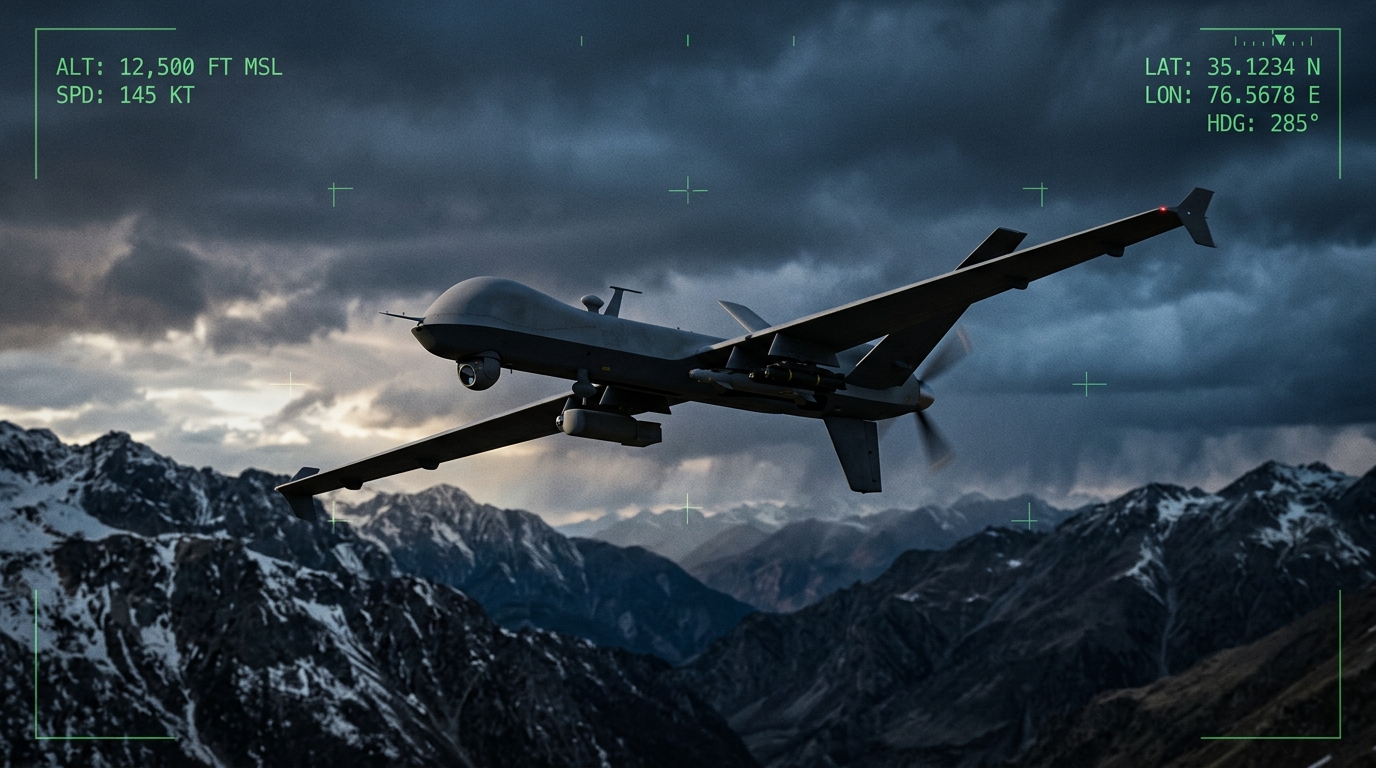
In a multi-domain threat environment, these isolated stacks create dangerous information gaps. A drone launched from a maritime vessel may first appear as a surface radar track, transition to an air defense track, and ultimately threaten a ground installation. If the maritime, air, and ground C2 systems do not share data in real time, the response to that threat is fragmented, delayed, and potentially ineffective. Modern C2 integration addresses this by creating a single data fabric that spans all domains, enabling track correlation, threat assessment, and engagement coordination from a unified platform.
Sensor Fusion: Building the Common Operational Picture
At the heart of any integrated C2 architecture is sensor fusion, the process of combining data from multiple sensor types into a coherent, deduplicated operational picture. Sensor fusion is what transforms raw detections from individual radar, electro-optical and infrared cameras, radio frequency scanners, signals intelligence receivers, and other sensor systems into actionable intelligence.
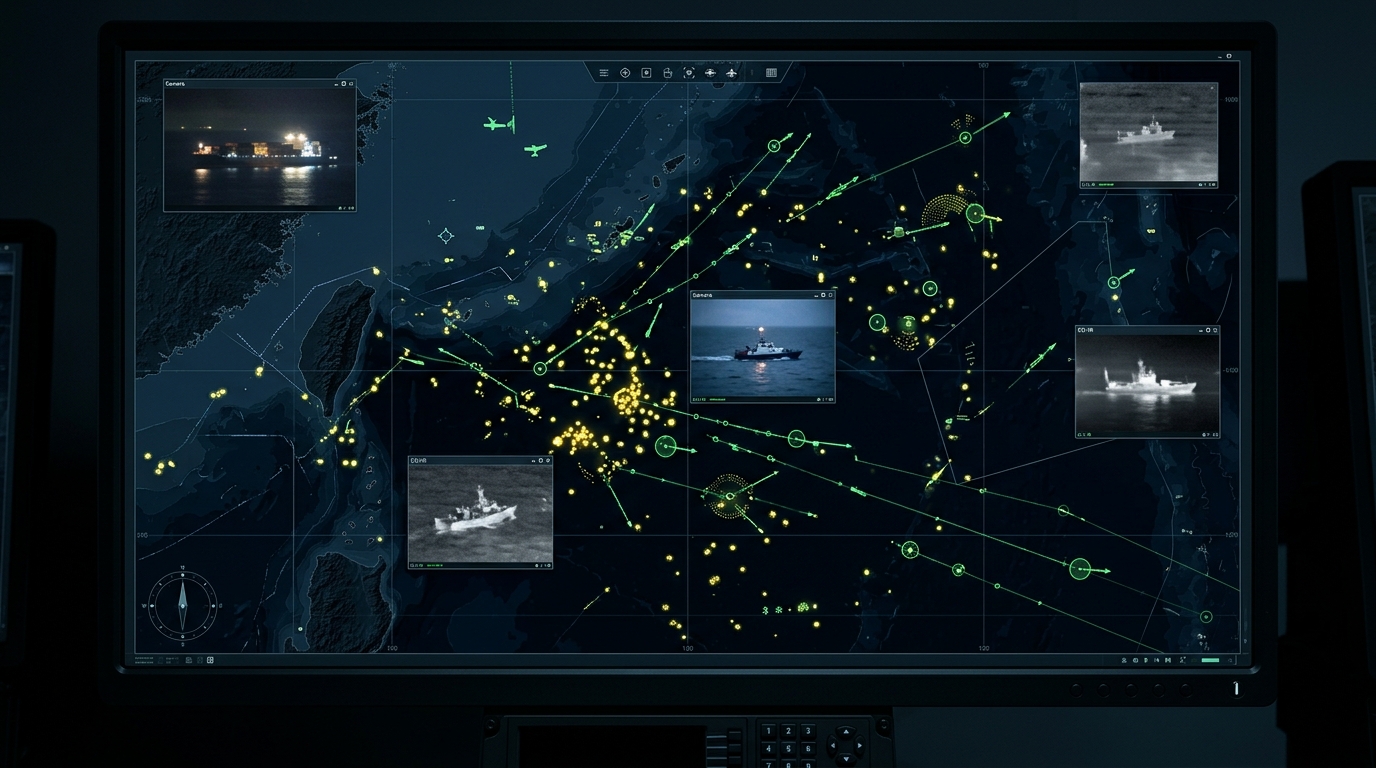
The technical complexity of sensor fusion should not be underestimated. Different sensors observe the same physical event from different perspectives, at different resolutions, with different latencies, and using different coordinate systems. A surveillance radar might detect an airborne target and report its range, bearing, and altitude. An electro-optical camera might observe the same target and report its visual signature and classification. A signals intelligence receiver might detect the target's data link emissions and report its communication profile. Fusing these three observations into a single, high-confidence track requires sophisticated algorithms for track association, data alignment, and conflict resolution.
Modern sensor fusion engines employ multi-hypothesis tracking, where the system maintains multiple possible interpretations of ambiguous data until sufficient evidence resolves the ambiguity. They use Bayesian inference to update track confidence as new observations arrive. They implement kinematic and attribute-based correlation to determine when two sensor reports refer to the same physical object. The result is a common operational picture that is richer, more accurate, and more timely than any single sensor could produce alone.
For Gulf region defense forces, sensor fusion is particularly valuable because the threat environment is characterized by low-observable targets such as small commercial drones, fast-moving threats such as anti-ship cruise missiles, and high-clutter environments such as dense maritime traffic. Effective fusion of multiple sensor modalities is essential for detecting, classifying, and tracking these challenging targets.
Situation Awareness Dashboards and Decision Support
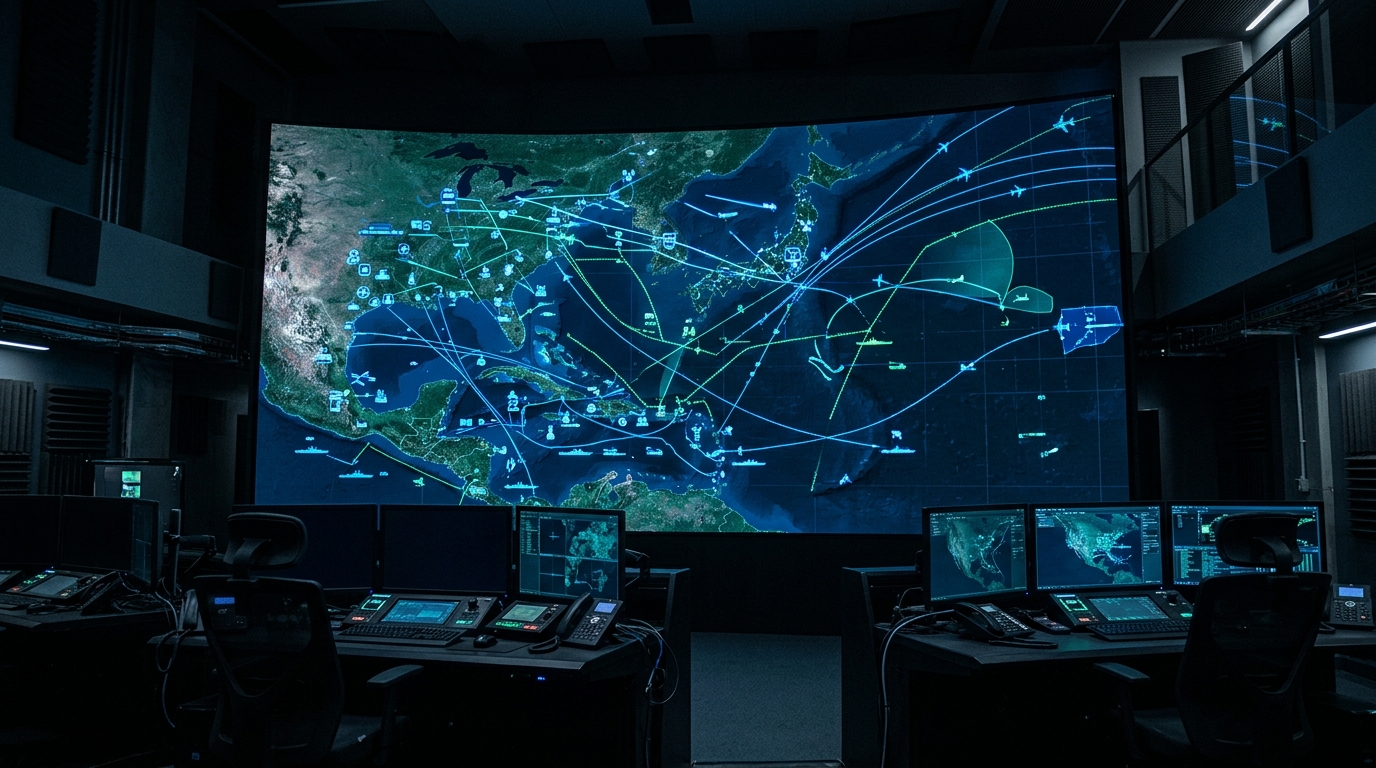
Raw fused data is only valuable if commanders and operators can interpret it rapidly and make sound decisions under pressure. This is where situation awareness dashboards and decision support systems become critical components of the integrated C2 architecture. Modern command centers employ large-format display walls, individual operator workstations, and mobile tactical displays to present the common operational picture in formats optimized for different roles and decision levels.
Effective situation awareness displays go beyond simple map-based track plotting. They incorporate automated threat assessment algorithms that prioritize targets based on their trajectory, speed, classification, and proximity to defended assets. They provide engagement timeline overlays that show weapon system coverage, engagement windows, and expected intercept points. They display force status dashboards that summarize the readiness and ammunition state of available defensive assets.
Decision support features embedded in modern C2 platforms can recommend optimal engagement sequences, calculate threat prioritization rankings, and alert operators to emerging patterns that might indicate a coordinated attack. These capabilities are not designed to replace human judgment but to accelerate the decision cycle by presenting commanders with pre-analyzed options rather than raw data streams. In high-tempo multi-domain operations, the difference between a thirty-second and a three-minute decision cycle can determine the outcome of an engagement.
Mobile Command Stations for Deployed Operations
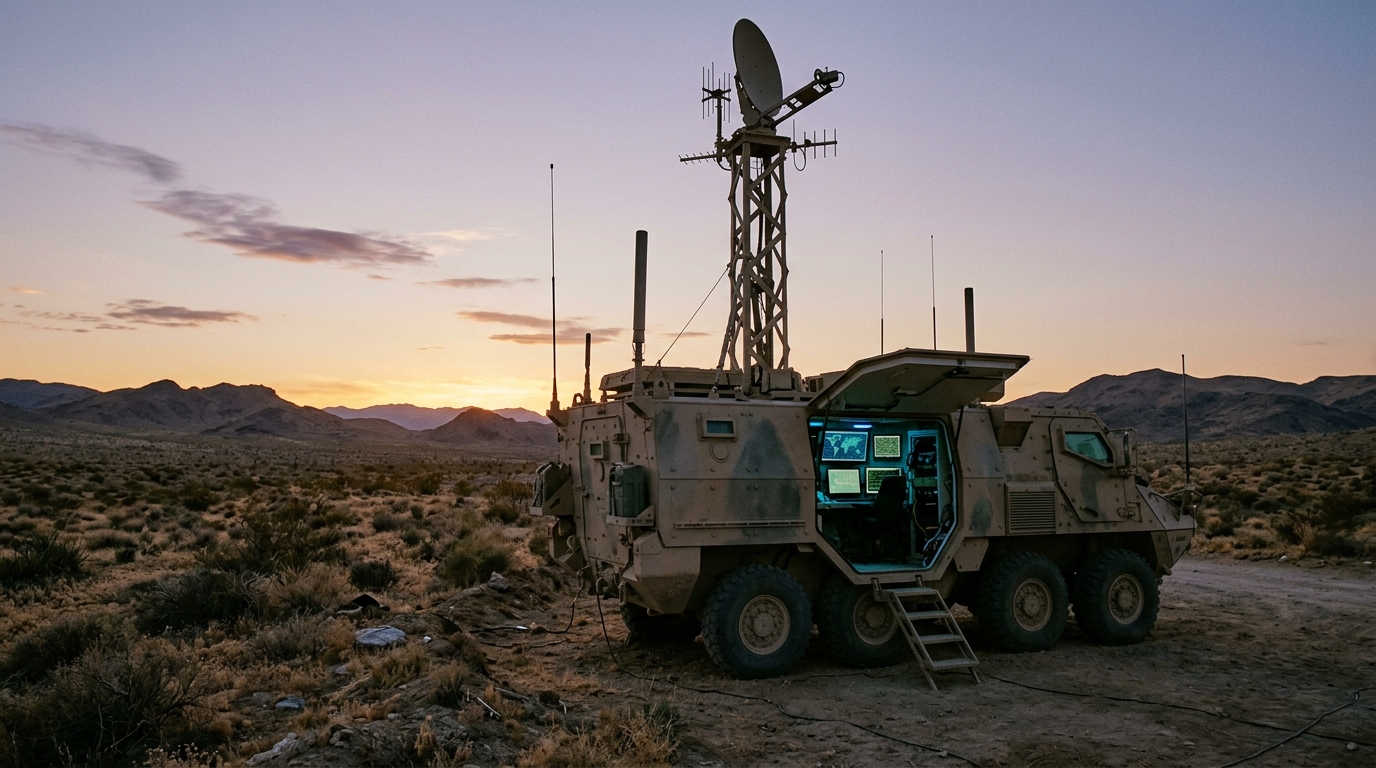
While fixed command centers provide the highest capacity and most robust infrastructure for C2 operations, modern defense forces require the ability to project command capability into the field. Mobile command stations, built on hardened vehicle platforms, bring integrated C2 functionality to forward-deployed positions, temporary operating bases, and crisis response locations.
A contemporary mobile command vehicle integrates multiple operator workstations, tactical display systems, satellite communication terminals, VHF/UHF radio suites, and network infrastructure within a deployable shelter. These systems connect to the broader C2 network through satellite links, providing seamless access to the same common operational picture available at fixed headquarters. When operating in communications-denied or degraded environments, mobile command stations can function in a standalone mode, managing local sensor networks and coordinating assigned forces independently until connectivity is restored.
The value of mobile C2 extends beyond military operations. Border security forces, critical infrastructure protection teams, and emergency response organizations all benefit from the ability to establish command capability at the point of need. In Saudi Arabia, where the vast geography of border zones and the dispersed nature of critical infrastructure sites create significant distances between operational areas and fixed headquarters, mobile command stations provide an essential capability for responsive, on-scene coordination.
Secure Communications: The Backbone of Integrated C2
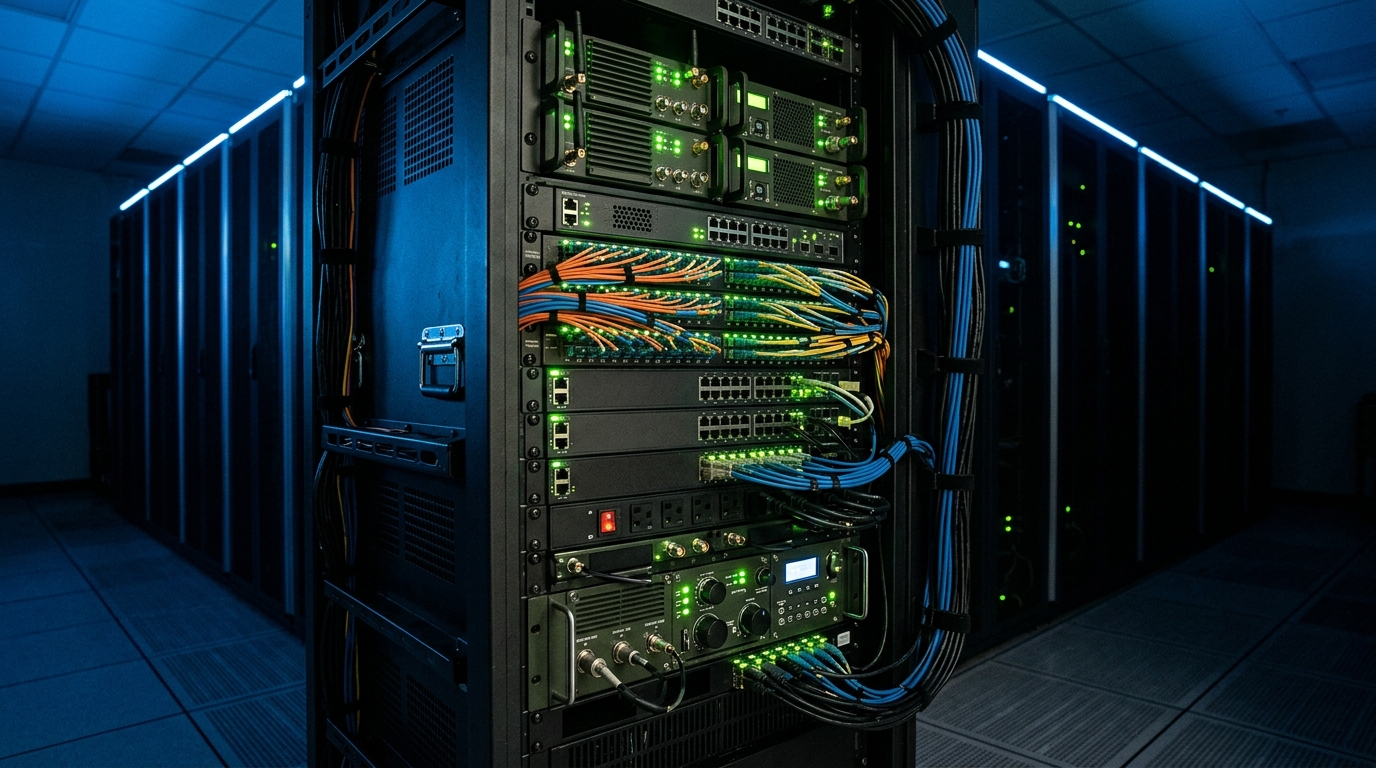
No C2 architecture can function without reliable, secure communications. The integration of multiple domains into a single operational picture requires high-bandwidth, low-latency data links that connect sensors, command nodes, and weapon systems across geographic distances. These links must be encrypted to prevent adversary interception, resilient against electronic warfare and jamming, and redundant to ensure continued operations if any single communication path fails.
Modern military communication architectures employ multiple transmission media in parallel. Fiber-optic networks provide the highest bandwidth for fixed installations. Satellite communications deliver beyond-line-of-sight connectivity for mobile and remote nodes. Tactical radio networks support voice and data communications at the tactical edge. Software-defined networking enables dynamic routing of traffic across these diverse media, automatically shifting data flows to alternative paths when primary links are degraded or denied.
Interoperability is a critical requirement for C2 communications, particularly for coalition operations. GCC defense forces frequently operate alongside allied nations in combined exercises and operational deployments. The ability to exchange tactical data between different national C2 systems, using standardized data link protocols and agreed information exchange formats, is essential for effective coalition operations. Achieving this interoperability requires both technical standards compliance and operational procedural alignment.
C4I Architecture: The Full Stack
The evolution from basic command and control to the full C4I concept, encompassing Command, Control, Communications, Computers, and Intelligence, reflects the increasing role of information technology in military operations. C4I represents the complete system-of-systems architecture that enables modern defense forces to plan, direct, and coordinate operations across all domains.
At the command level, C4I provides the decision frameworks, operational planning tools, and mission management capabilities that commanders use to translate strategic objectives into tactical actions. At the control level, it delivers the real-time monitoring and engagement management functions that enable operators to direct forces and weapon systems. The communications layer provides the secure, resilient connectivity described above. The computers layer encompasses the processing infrastructure, databases, software applications, and user interfaces that transform raw data into actionable information. The intelligence layer integrates all-source intelligence products, predictive analytics, and threat assessments into the operational decision cycle.
A well-designed C4I architecture is modular, scalable, and standards-based. It allows individual components to be upgraded without disrupting the overall system. It scales from small tactical deployments to theater-level operations. It uses open standards and published interfaces to support integration of new sensors, weapon systems, and allied systems as requirements evolve. These architectural principles are particularly important for defense forces in the region, where technology modernization programs span multiple years and must accommodate both legacy equipment and emerging capabilities.
Regional Adoption: GCC C2 Modernization
Defense forces across the GCC have recognized the strategic importance of C2 modernization and are investing significantly in integrated command architectures. The Kingdom of Saudi Arabia, as the largest defense spender in the region, has prioritized the development of integrated air and missile defense command structures, border surveillance coordination centers, and joint force command capabilities as part of its broader defense transformation agenda.
Several factors drive C2 modernization in the Gulf region. First, the proliferation of asymmetric threats, including unmanned aerial systems, cruise missiles, and maritime disruption tactics, requires faster decision cycles than legacy C2 systems can support. Second, the scale of the defended area, spanning thousands of kilometers of borders, extensive coastlines, and numerous critical infrastructure sites, demands distributed C2 architectures that can manage operations across vast geographic areas. Third, the requirement for coalition interoperability with allied defense forces necessitates modern, standards-compliant C2 platforms capable of participating in combined operations.
The modernization trajectory in the region is moving toward cloud-enabled C2 processing, artificial intelligence for automated threat assessment, and software-defined architectures that can be updated rapidly to address emerging threats. These trends align with broader global defense technology developments while addressing the specific operational requirements of Gulf region security environments.
The Future of Integrated Command
The trajectory of C2 integration points toward increasingly autonomous, distributed, and resilient architectures. Future C2 systems will leverage artificial intelligence and machine learning to process sensor data at speeds that exceed human cognitive capacity, presenting commanders with recommended courses of action rather than raw information. They will operate across mesh networks that have no single point of failure, ensuring continued operations even under sustained electronic attack. They will integrate space-based sensors and effects alongside traditional land, sea, and air capabilities.
Edge computing will bring processing capability closer to sensors and shooters, reducing the latency inherent in centralized architectures. Digital twin technology will enable commanders to simulate the effects of different courses of action before committing forces. Augmented reality interfaces will overlay tactical information onto the physical environment, providing operators with intuitive situational awareness without the constraints of fixed display screens.
For defense forces in Saudi Arabia and the broader GCC region, the investment in integrated C2 architecture is not merely a technology modernization effort but a strategic imperative. The ability to see, understand, decide, and act across multiple domains faster than any adversary is the fundamental advantage that modern C2 integration provides. As threats continue to evolve in speed, complexity, and sophistication, the command and control architecture that underpins the response must evolve in parallel.